
A ski jumper’s ability to stay in the air for so long is guided by the basic principles of physics and extensive training
You must have seen ski jumpers float above the snow hill for several seconds, which may seem quite unbelievable. Moreover, the landing is so smooth, it all seems absolutely stunning. Depending on the length of the snow hill, a ski jumper can float in the air for around 4-7 seconds. To clear all doubts, let us see how is it possible for ski jumpers to stay in the air for so long and how do they train for that?
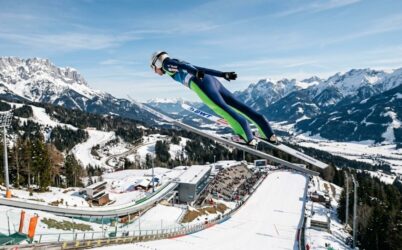
Steps in a perfect ski jump
Speed phase - In this step, the ski jumper starts to accelerate from an incline. This incline is usually around 35 degrees. During this phase, the ski jumper achieves a speed of around 90 km/h. By crouching low and streamlining their body, the ski jumper achieves aerodynamic efficiency.
Takeoff phase - At the end of the ramp, the takeoff phase starts. With a powerful leg extension, the ski jumper moves upward. Timing is very important in this maneuver. The idea is to leave the ramp at the right angle to gain vertical velocity. At this point, the ski jumper aims to create an optimal trajectory.
Flight phase - In this phase, the ski jumper starts to float in the air, along the slope. However, gravity is constantly pulling them down. The ski jumper utilizes special techniques to ensure they can extend their float for as long as possible. For context, the V-style technique is a standard in ski jumping. It helps increase the lift by up to 30%.
Landing phase - This is the final phase of the ski jump. The design of the landing slope is such that it matches the natural touchdown position of the ski jumper.
While the ski jumper's skills are important for a perfect ski jump, the equipment used also plays a key role. For example, longer skis are used to improve lift. Special microfiber suits are used, which have controlled air permeability for optimal lift. Ski jumpers can cover up to 200+ meters on big hills and float in the air for 5-7+ seconds.
How ski jumpers train to increase air time?
Training is the key to a perfect ski jump. There are various aspects, as described below.
Strength training - Bodily movements during all phases of the ski jump are crucial. For this, a ski jumper does strength training across the legs and core. Exercises include lunges, squats, box jumps, depth jumps and heavy weight lifting.
Aerodynamic training - These exercises are done to learn efficient ways to reduce aerodynamic drag. Professional ski jumpers often receive such training in a wind tunnel. Even tiny movements of specific body parts can make a big difference in aerodynamic efficiency.
Water ramps - As snow hills may not be available throughout the year, ski jumpers can practice their moves across synthetic surfaces and water ramps. Trampoline and balance drills are often used to learn and improve core stability and mid-air control maneuvers.
Mental fitness - Along with physical fitness, ski jumpers also need to prepare themselves mentally for the challenging ski jumps. Handling 100+ meter tall ramps and around 100 km/h speeds is not an easy task. It requires great mental preparedness and confidence.
In conclusion, the long air time in a ski jump is achievable via a combination of the basic laws of physics, the equipment used and the skills of the ski jumper. Training and use of modern tools also have contributed significantly to the magical human flights seen in ski jumping.